
Here is something to think about: it is easier for companies to achieve a 30% inventory reduction than a 3% reduction. I know that this statement is counter-intuitive so you may be saying to yourself: How can that be, surely achieving a lower target is easier than achieving a higher target? After all, don’t […]
Achieving Accurate Inventory Records

If you are on LinkedIn you may know that I am an active contributor to various forum discussions. A few days ago I made the comment on one such discussion on how to control inventory. My comment was: ‘Controlling inventory is simple – after all it (usually) doesn’t get up and walk away […]
Spare Parts Management eBook
Subject Area: Spare Parts Management eBook The Problem with Spare Parts Management at Large Companies Managing spare parts at a large company presents a unique set of challenges and problems. It is only by ensuring continuous and wide-spread access to information and training that is credible, reliable, and practical, that your company can […]
Stock Turn Definition
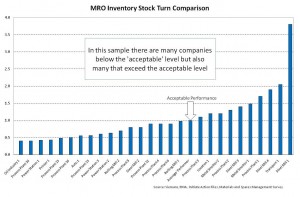
Stock turn is one of, if not the, most important metrics that you can use to measure the effectiveness of your spare parts inventory management. However, like all metrics you do need to calculate it and use it in the right way. One of the most common issues with stock turn measurement is that companies […]
The Spare Parts Repair or Replace Decision

Recently I needed to make a spare parts repair or replace decision because I experienced something that might be familiar to some readers – an equipment breakdown! Last week I was mowing the lawn at the back of my house when my 15 year old lawn mower just gave up. There I was with the […]
Definition of Just In Time (JIT)

Just In Time (JIT) is perhaps the most often quoted, and yet misunderstood, term in management. JIT, developed as one pillar in the Toyota Production System (the other being autonomation), is a production management method that aims to eliminate waste and improve product flow on a production line. This is usually achieved through the application […]
5 Common Techniques for Spare Parts Management That You Should NOT Use
In this recording of a public webinar Phillip Slater identifies 5 common techniques for spare parts management that you should not use. Phillip explains what they are and why they should not be used. Click here for information on our Practitioner Playbook. Posted by: Phillip Slater […]
Why Spare Parts are Different to Other Inventory Types
In October 2012 Phillip Slater was interviewed by Dustin Mattison for the Kinaxis Supply Chain Expert website. In this interview Phillip discusses why spare parts are different to other inventory types and what this means for those that manage spare parts inventory. Posted by: Phillip Slater
Reorder Point Definition – What You Need to Know
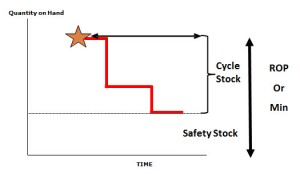
Understanding the Reorder Point Definition is Vital Understanding the reorder point definition is a vital element of understanding and being able to effectively execute spare parts management. With a clear understanding of the reorder point definition companies can avoid two key problems: The problem of overstocking due to over-estimating the reorder point. The problem of stock […]
Economic Order Quantity Definition
EOQ is often misunderstood to be the purchase quantity that provides the lowest purchase cost per unit. For example, when buying in bulk, and as a result many organizations overstock their inventory believing that they are doing the right thing. However, a better definition of Economic Order Quantity takes into account the total cost of holding […]