Better Inventory Starts With Better Decisions
 Spare parts inventory outcomes are determined by the decisions people make: what to stock, how much to hold, when to replenish, and when to review those decisions.
Spare Parts Inventory Process Optimization (IPO) improves the knowledge, methods, and management processes behind those decisions.
Why the Process Matters
Insufficient inventory puts equipment availability at risk. Excess spare parts inventory ties up capitaland increases exposure to obsolescence.
Both problems can persist when decisions are based on inappropriate methods, undocumented assumptions, or inconsistent practices across departments and sites.
Optimizing the inventory is the objective.
Optimizing the processes that determine the inventory is how you improve the results and sustain them.
Read more about Spare Parts Inventory Process Optimization >>>
Develop the Capability to Improve
Individuals
To make better decisions about which parts to stock, how many to hold, criticality, obsolescence, or inventory policy, investigate our Practitioner Toolkit. This Toolkit provides practical calculators, checklists, templates, specialist guidance, and structured learning resources to help you address real spare parts management problems. It is a resource to use when you need it, not simply a course to complete.
Explore the Practitioner Toolkit >>>
Organizations and Teams
Our Foundations for Teams program helps maintenance, procurement, engineering, stores, and finance make informed and consistent decisions. These groups often have different priorities, assumptions, and approaches. Foundations for Teams is a facilitated development program that builds shared understanding of spare parts management, aligns decision-making principles, and prepares your team to work together more effectively.
Explore Foundations for Teams >>>
Targeted Improvement Programs
Our Targeted Improvement Programs are tailored for organizations that need to reduce excess inventory, develop stocking policies, standardize practices across sites, or implement a structured improvement program. We work with organizations to develop the capability, decision processes, and practical approaches needed to achieve defined improvement outcomes. Programs are tailored to your objectives and may combine team development, specialist resources, policy development, and implementation support.
Explore Targeted Improvement Programs >>>
What Better Processes Deliver
Effective decisions. Efficient workflows. Cost-efficient management. Consistent principles. Adaptability as operating requirements change.
The aim is appropriate inventory investment, availability when required, better management of criticality and obsolescence, and control that lasts beyond any single improvement project.
Technology can support the decisions. Your people need to understand and own them.
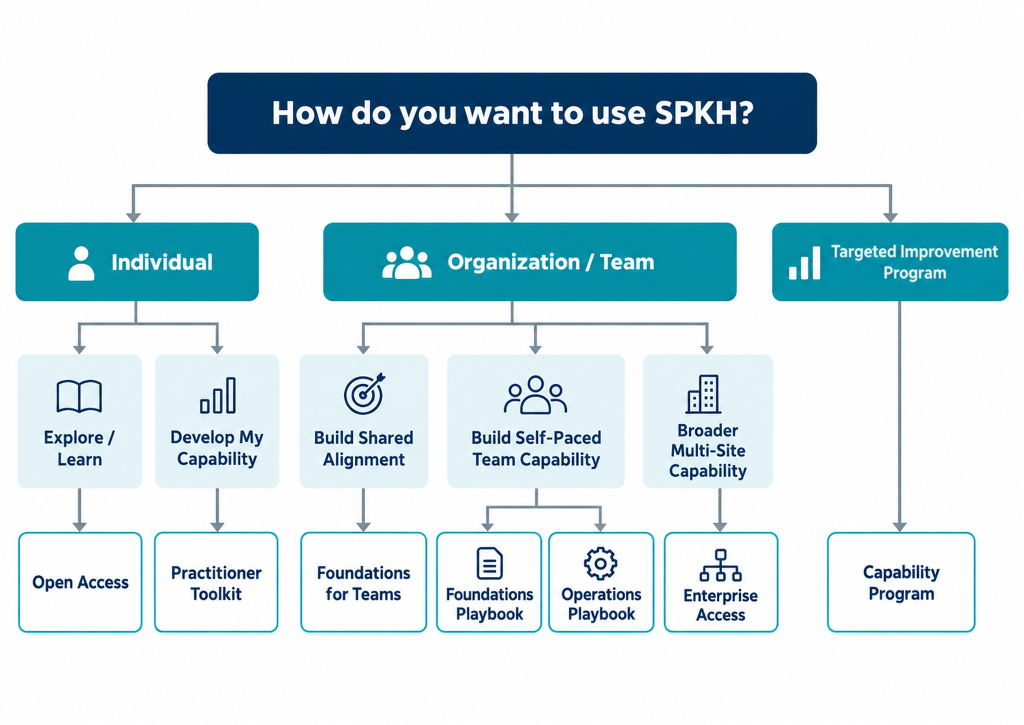
Try our Selection Tool to find where you should start. Try Our Selection Tool
Why Spare Parts Require a Different Approach
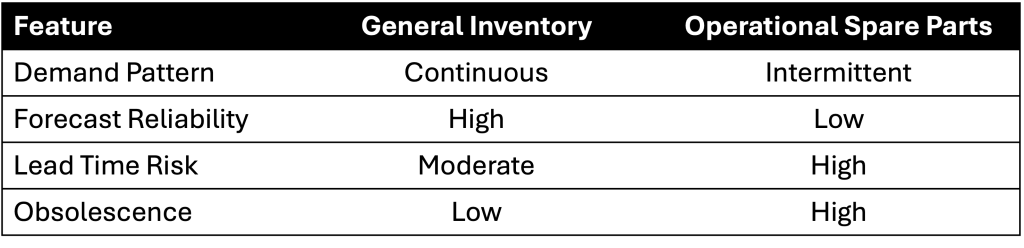
 Spare parts inventory is not the same as retail, wholesale, or production inventory.
Demand can be unpredictable. Lead times can be long. The consequences of not having a part when needed can far exceed its purchase cost.
These differences mean that conventional inventory techniques do not always produce appropriate spare parts decisions.
The challenge is not simply to hold less inventory. It is to make better decisions about what to stock, how much to hold, and how those decisions are managed over time.
That is the thinking behind the Spare Parts Decision Framework.
Explore the Spare Parts Decision Framework >>>
This table shows the key differences between spare parts and other general inventories.
Practical Answers to Important Spare Parts Questions
| How do I know which spare parts to stock? Deciding which spare parts to stock is one of your most important decisions — and one of the easiest to get wrong. Explore this question >>> |
How do we calculate the Re-Order Point? Too high ties up cash. Too low increases downtime risk. The decision needs structure. Explore this question >>> |
| How do we determine spare parts criticality? Learn why criticality is about consequence and availability, not just price or usage. Explore this question >>> |
How do we manage obsolete inventory? Obsolescence usually starts with early decisions, not with the stocktake that reveals it. Explore this question >>> |
| How do I optimize spare parts inventory? Optimization should focus on process not just numbers. Explore this question >>> |
What should be in a spare parts stocking policy? Clarify the rules that turn good intentions into consistent decisions. Explore this question >>> |
Jozef Ferenc
Lear Corporation
Pieter Janssens
Longveld
Sondra Carroll
Shaw Industries Group
Probin Konwar
QAFCO

“Achieving your spare parts management goals requires specific process and decision-making skills. You can either adopt these and improve, or stay where you are.”
SparePartsKnowHow.com was established by Phillip Slater, an internationally recognized spare parts inventory management specialist, author, and consultant with more than 40 years of experience.
Our resources draw on decades of practical work with asset-intensive organizations in manufacturing, mining, oil and gas, utilities, and other industries.
The emphasis is on practical application: helping people understand the decisions they face, apply appropriate methods, and sustain improvements.
Better decisions. Better inventory performance. Capability that lasts.