Subject area: Materials Data Management
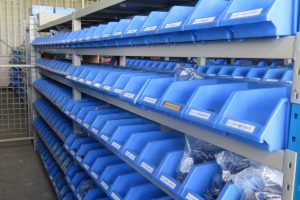 You cannot make good spare parts decisions if you cannot clearly identify what you already have, what you are buying, where it is used, and whether equivalent items already exist in your system.
That sounds obvious.
Yet many companies are trying to manage critical spare parts inventory with poor item descriptions, duplicate records, inconsistent naming conventions, weak bills of material, and limited data governance.
The result is not just messy data.
It is excess inventory, avoidable purchasing, longer search times, stock-outs, procurement errors, and reduced confidence in the systems that are meant to support maintenance and operations.
Materials data management is not an administrative clean-up exercise. It is a decision-support requirement.
Poor materials data affects almost every part of spare parts management.
When item descriptions are inconsistent, people cannot reliably find what they need.
When duplicate records exist, inventory holdings are artificially inflated.
When bills of material are incomplete, planners and maintainers cannot confidently identify the parts required for work.
When governance is weak, even a well-cleaned catalogue will deteriorate again over time.
This creates practical problems such as:
- The same item being stocked under multiple descriptions.
- Maintenance teams bypassing the storeroom because they cannot find what they need.
- Procurement teams spending unnecessary time clarifying requirements.
- Incorrect parts being purchased or expedited.
- Optimization software producing weak recommendations because the underlying data is unreliable.
- Teams losing confidence in the ERP, CMMS, or inventory system.
In spare parts management, data quality is not a technical side issue. It directly affects availability, cost, risk, and operational performance.
Through our commercial relationship with a specialist partner, SparePartsKnowHow.com can connect you with materials data management software and services designed specifically for asset-intensive environments.
Depending on your needs, this may include support for:
- Materials data cleansing and standardization.
- Duplicate identification and rationalization.
- Catalogue enrichment.
- Naming convention and description standards.
- Data governance rules and workflows.
- Bills of material development and improvement.
- Asset hierarchy support.
- Physical walkdowns and data validation.
- Assessment of current materials data quality.
- Ongoing governance to prevent data degradation.
The objective is not simply to make the data look cleaner.
The objective is to make your spare parts data useful, searchable, reliable, and fit for decision-making.
SparePartsKnowHow.com does not present this as our own software or internally delivered service.
The software and specialist services are provided by a partner organization with relevant materials data management capability.
Our role is to help you understand where materials data fits within the wider spare parts management problem and, where appropriate, introduce you to the partner.
This matters because materials data projects should not be treated as isolated IT or catalogue exercises.
They should be connected to the operational decisions the data is meant to support: stocking, procurement, maintenance planning, optimization, governance, and risk management.
SparePartsKnowHow.com has a commercial relationship with the software provider.
This means we may receive a commercial benefit if you proceed with the partner solution following an introduction from us.
We only make introductions where we believe the solution is relevant to the spare parts inventory problems being discussed.
Poor materials data does more than create catalogue problems.
It affects stocking decisions, procurement accuracy, maintenance planning, optimization outcomes, and inventory governance.
If your spare parts data is difficult to search, inconsistent, duplicated, or unreliable, our partner can help you assess whether specialist materials data management support is the right next step.
Contact us for a confidential discussion about your needs.