A spare parts inventory optimization project can reduce stock and release cash. The harder question is what happens next. If the decisions that created excess inventory remain unchanged, stock can build up again. New parts are added, old settings stay in the system, and people make exceptions to protect operations.
AI Spare Parts Technology Won’t Fix Weak Decisions
Better technology can improve analysis. But it cannot compensate for unclear definitions, poor decision logic, or inconsistent practices. Artificial intelligence is rapidly becoming part of the conversation around maintenance, supply chain, reliability, and spare parts management. That makes sense. The potential is significant. AI can analyze large volumes of data,
Twenty-Five Years of Better Spare Parts Decisions
September 2026 marks 25 years since I established Initiate Action Pty Ltd. When I started the business in 2001, I was focused primarily on consulting: working directly with organizations to reduce excess spare parts inventory, improve availability and establish more disciplined management practices. At the time, I could not have
The Cost of Inconsistent Spare Parts Decisions
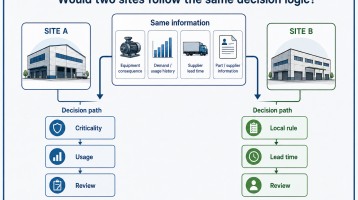
A multi-site organization does not need every location to hold the same inventory. Different equipment, operating environments, supply arrangements and risk exposures will naturally produce different stocking requirements. However, those differences should result from local circumstances—not from each location using a different decision process. This distinction is critical.
Spare Parts Capability Cannot Reside in One Person
In many organizations, the people who know the most about spare parts are easy to identify. They are the people others call when a part cannot be found, when a stocking decision seems questionable or when a supplier fails to deliver. They often know which catalogue descriptions are unreliable, which
Which Spare Parts Playbook is Right for You?
Since opening the Operations and Practitioner Playbooks, one question has naturally come up: Which Playbook is right for me? The answer does not depend only on your job title or how many years of experience you have. It depends on the question you are trying to answer and the work
The Complete SparePartsKnowHow.com Playbook Platform is Now Open.
For the past few months, we have been reshaping SparePartsKnowHow.com around a simple idea: People responsible for spare parts need more than another course. They need practical access to the right expertise, at the point where they are making decisions. That work has now reached an important milestone. The Operations
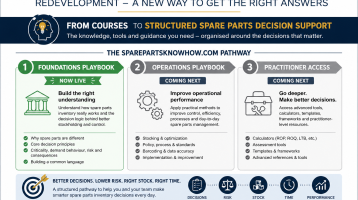
From Training Courses to Decision Support: The Next Stage for SparePartsKnowHow.com
For many years, SparePartsKnowHow.com has presented much of its expertise through training courses and supporting resources. That structure made sense. Training is important. Spare parts inventory management is often misunderstood, and many people who become responsible for spare parts have had little or no spare parts-specific education. But over time,
What is Spare Parts Management?
Spare parts inventory management is the process of making decisions about the stocking, control, and use of spare parts that support physical assets and equipment. Its objective is to balance operational risk, service requirements, and inventory investment. Why Spare Parts Are Different Unlike retail inventory: * Demand is often irregular.