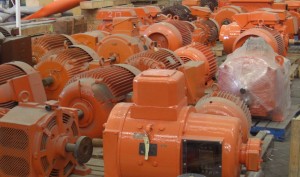
 The management of rotable items and repairable spare parts is different to the management of other inventory items and proper control requires greater cooperation between maintenance and stores/inventory management.
The successful management of these items is far more active than other spare parts as maintenance and store/inventory personnel must work together to ensure that there is visibility of the status of items.
The management of rotable and repairable spare parts is one area where, as the saying goes, often the left hand doesn’t know what the right hand is doing!
Definition: Rotable and Repairable Spare Parts
One of the key problems faced by any organization that utilizes complex equipment and machinery is the management of rotable and repairable spare parts.
Rotable items are generally thought of as items of plant or assets that periodically are changed out for repair or overall. They most probably are tracked and maintained as assets in the CMMS.
Repairable spare parts are basically spare parts that, through repair, can be returned to an ‘as new’ condition.
Managing Rotable and Repairable Spare Parts
Just a few of the problems experienced with these items are:
- Ensuring that new items aren’t ordered to replace items that are out for repair
- Deciding when to purchase replacement items and scrap the repairable spare parts
- Inspecting items to ensure that they are ready for use
- Managing the repair process
- Averaging the value of both new and repaired items in the inventory holding
- Deciding whether to batch repair or repair items individually
The management of rotable items and repairable spare parts is different to the management of other inventory items and proper control requires greater cooperation between maintenance and stores/inventory management.
The successful management of these items is far more active than other spare parts as maintenance and store/inventory personnel must work together to ensure that there is visibility of the status of items.
The management of rotable and repairable spare parts is one area where, as the saying goes, often the left hand doesn’t know what the right hand is doing!
Three Tips to Help Improve Your Rotable and Repairable Spare Parts Management
- Track the status of the item. For successful management you must know if the item is ready for use, awaiting repair (or batching), or undergoing repair.
- Determine in advance your rules for whether to repair or purchase. To do this you need to consider issues such as the cost of repair vs. the cost of purchase, the functionality following repair, whether the item will provide the reliability performance you require, lead times for both repair and supply, dependent demand for components, the number of items in the system, and so on.
- Let the accountants worry about the cost allocation. The question that I am most often asked about rotable and repairable spare parts is ‘what is the right way to allocate the costs?’. My response is for both maintenance and storeroom personnel to focus more on tracking and repair/replace decisions than the cost allocation, as this is usually where the management of rotable items and repairable spare parts goes wrong. Yes, cost issues will drive behavior but the key is to ensure a reliable supply of spare parts.
The management of rotable items and repairable spare parts is more complex than other types of spares, however, by recognizing this difference and working on appropriate processes and measures there is no reason why this should be any more problematic than the management of other inventory items.
Through the Practitioner Playbook you can access an extended article that fully describes the process and decision making for managing repairable spare parts here.
Click here for information on our Practitioner Playbook.
Author: Phillip Slater