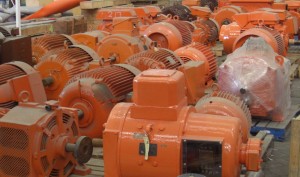
 One of the issues that arise with spare parts management in every industry is the management of excess inventory.
This is particularly so with engineering spares, used to provide operational support to maintenance and production.
With these spare parts there is often a high number of items that are used only infrequently but which may be needed at short notice or deemed critical.
Companies hold these items with an expected maximum-minimum holding of 1-0. That is the company plans to hold only one item in stock and then order another one when they use that one.
There is nothing wrong with stocking plans that include a 1-0 approach but sometimes circumstances conspire to result in holding more than the planned level of just one item in stock.
Many of These Items Are Slow Moving
Given the slow moving nature of these items we cannot reasonably assume that normal use of the excess spare parts inventory will quickly return the holdings to normal. Therefore companies need a deliberate strategy to address and manage this type of excess inventory, that is, to return the holding level back to the original plan.
Dealing with the excess spare parts inventory can be problematic because many people do not see the point of removing items that they have already purchased and for which they have already paid. Their argument is that these spares are now, in effect, a sunk cost. That is, a cost that has already been incurred and which cannot be recovered.
The Sunk Cost Argument is Not Universal
However, this sunk cost argument is not universally true as there are a number of ways that excess spare parts inventory items can be removed from the inventory and provide an economic benefit to the company. This then presents an issue that is ‘belief’ based rather than economically based. That is, it people believe that there is no economic solution so they don’t take action, when in fact there is. As with any aspect of management, developing a strategy to manage a belief must start with understanding and explaining why it is important to act. Managing excess inventory is no different.
First, it is important to recognize that holding excess spare parts inventory indicates a failure of the inventory management system at the company. In this case the ‘system’ has allowed and then not addressed the overstocking. This should ring very loud alarm bells for any inventory manager because they must now wonder what else the ‘system’ has allowed that was not part of the plan.
Second, not initially recognizing a systemic problem, and then allowing that problem to continue, has a cultural impact. Not removing items that are not part of the plan sets a poor example for all other inventory management decisions. Not dealing with the problem sets an example that can undermine the rest of the company’s inventory initiatives.
Dealing With Excess Spare Parts Inventory
Excess spare parts inventory is an insidious problem because the levels increase slowly over time and this often makes the trends difficult to spot. Usually, there doesn’t seem to be much of a problem until suddenly there is! Dealing with this issue requires vigilance and timely action from the inventory manager.
Click here for information on our Practitioner Playbook.
Posted by: Phillip Slater