In this Two Minute Tutorial Phillip Slater discusses the only two reasons why you (or anyone) holds spare parts inventory. The first reason is when you can’t access supply within your planning horizon. For example, if you have a need for a spare part that is critical to your operations and the
Why Isn’t Procurement Treated as a Partner in Spare Parts Management?

When it comes to the management of spare parts used for maintenance and operations support, the procurement team is often treated as an outsider, a service provider, rather than a partner in ensuring that the objective of maintaining operational capacity is achieved. In my experience, this approach is a drag
Spare Parts Management Best Practice #5: Eliminate Squirrel Stores
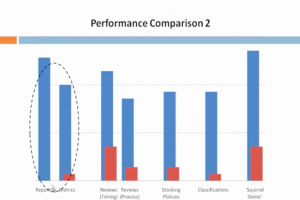
Those of you who have been reading my blog posts for some time will know that squirrel stores are one of my ‘hot buttons’ when it comes to spare parts management best practice. (For those not familiar with the term ‘squirrel stores’, it
Stop Being Incremental with Spare Parts Management

There is an old management maxim that says that ‘the good is the enemy of the great’. The way that I interpret this expression is that make real progress with their spare parts inventory management companies need to stop being incremental. This is because incremental activity makes us feel like
Spare Parts Management Best Practice #4: Develop Clear ROP & ROQ Logic and Guidelines
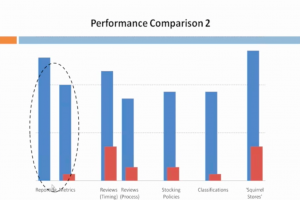
Spare Parts Managment Best Practice #3 required that you develop your stock/don’t stock criteria – that is deciding whether or not to stock an item. Now, for best practice #4 you need to be clear about how to decide how many to
Spare Parts Management Best Practice #3: Define Your Stock/Don’t Stock Criteria
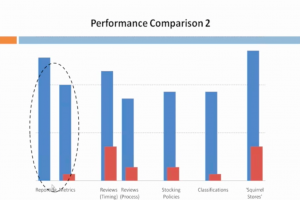
We have all been there: you are deciding whether or not to stock a spare part and the first thought that pops into your head is, ‘just in case’. After all, you don’t want to be the person that lets the team
Spare Parts Management Best Practice #2: Regular Reviews
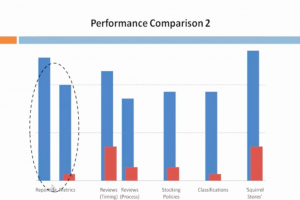
One of the major problems with spare parts management is the attitude of ‘set and forget’. You know this situation: at some point in the past the holding levels for an item were set and they have not been reviewed since… …unless,
Spare Parts Management Best Practice #1: Create Transparency
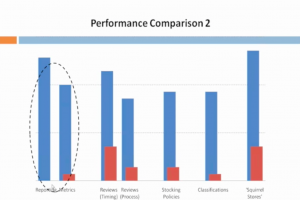
In short, this best practice requires that you create transparency in your spare parts inventory management through the use of classifications, metrics and reporting. Transparency enables you to see what is happening with different types of inventory, with the value, and with
Defining Best Practice for Spare Parts Management
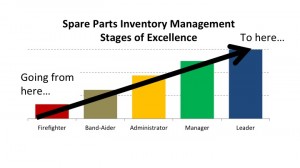
Defining best practice for spare parts management can be tough. In fact, our recent research identified that, among the people that manage spare parts inventory, very little is known about best practices – that is, what top performers do better than others, what to focus
Spare Parts Inventory Management Secrets

Subject Area: Spare Parts Inventory Management Secrets The Reality of Spare Parts Inventory Management One of the little acknowledged issues with spare parts inventory management is that for many companies they really don’t know what they have and/or why they have it. How can that be you ask. Don’t